

Graphic Design Course
11-03-2026
Difference Between Animation and Graphic Design: A Complete Guide for Students
Read More ...
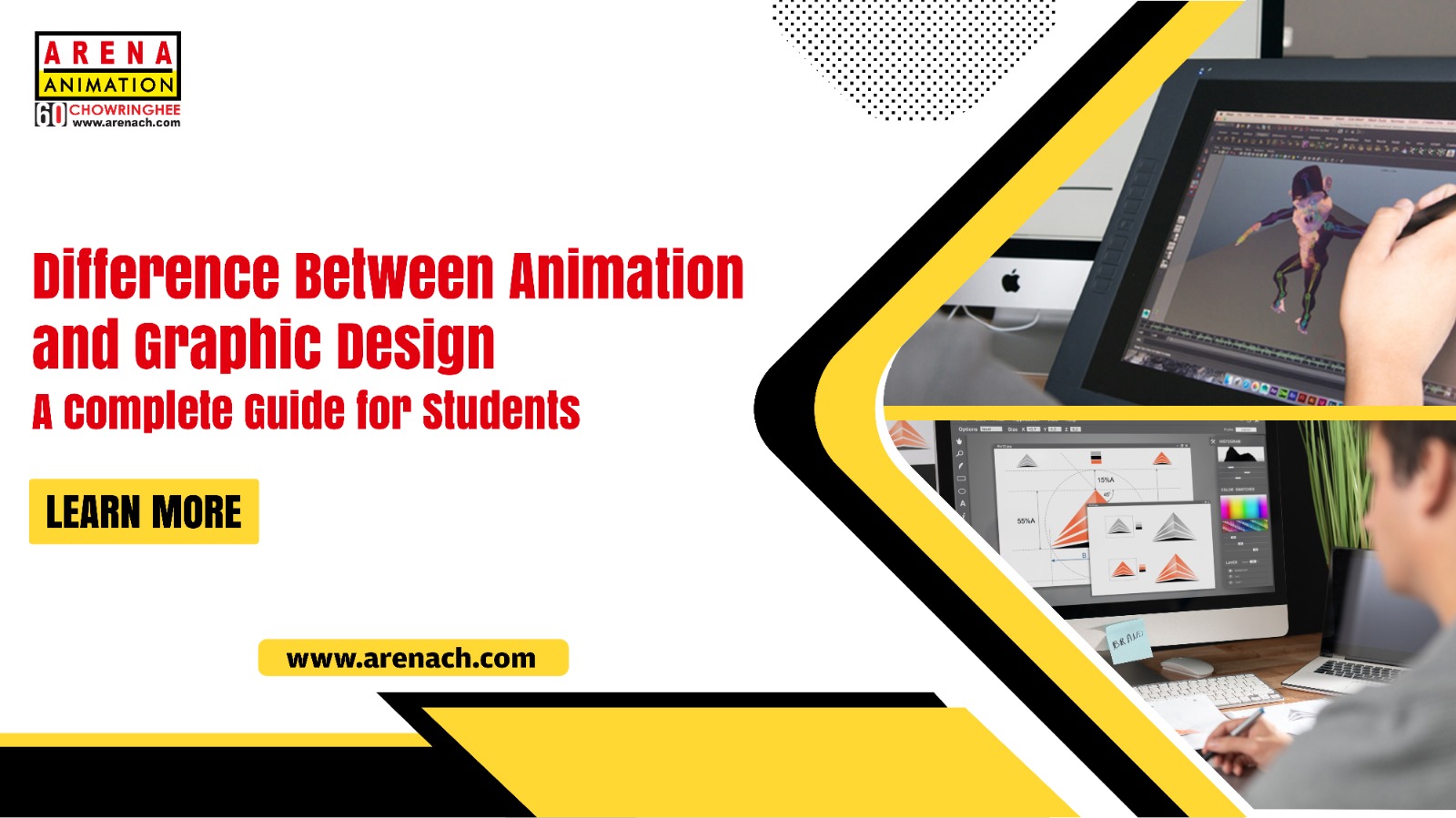
Choosing a creative career is not always easy for students because many design fields are almost identical at first glance. Animation and graphic design are two of the most popular choices among students who love creativity and digital tools. Nonetheless, these two fields serve different purposes, require different skills, and one can expect to follow different career paths. Knowing what distinguishes animation from graphic design is a step forward in helping students decide the route that suits their interests and capabilities. Even though both are forms of visual art, one centers around storytelling through characters and action, whereas the other is about communication of ideas through still images, mainly in the areas of branding, advertising, and media.

Graphic design involves the creation of visual components that help convey info or ideas. Designers incorporate various elements such as typefaces, pictures, hues, and overall arrangements to make visually pleasing and communicative graphics. This type of design is mainly implemented in advertising branding flyers, online content, and product wrapping. The core objective is to simplify the communication of information in an engaging and attractive manner. To distinguish between graphic design and animation, one must first understand that graphic design primarily deals with static images rather than moving ones.

Animation means making a sequence of still images play in such a way that viewers see motion. These cartoons or characters are shown very rapidly so that they create the impression of life. It is one of the most popular mediums of communication, and movies, television, video games, billboards, and e-learning materials, to name a few, make use of it. Animators work on the movements, facial expressions, and narrative of the story using visually animated motion. Apart from that, a big point of difference between animation and graphic design is that animation represents the element of motion, whereas the communication of graphic design is usually through still images.

The principal aim of graphic design is to communicate. Designers craft visual elements that articulate concepts clearly and appealingly so that the audience can swiftly grasp the information. A poster needs to be eye-catching, a logo should embody a brand identity, and a brochure has to display the information through visuals. Graphic designers pay attention to composition, arrangement, and harmony of the design elements. This emphasis on visual communication is one of the reasons why animated design is different from graphic design, as the former is more about motion and narrative, whereas the latter is concerned with static information design.

Animation is all about telling stories through movement. Animators make characters come alive by moving, interacting, and showing emotions. Usually, it starts with storyboards or rough sketches which get transformed into moving images. Animation is a great way to convey concepts, amuse people, and craft captivating visual experiences. A lot of educational media and entertainment sectors are animated in order to attract the audience. Since animation is focused on motion and timing, it is evident that animation is distinct from graphic design regarding creative style and production.

Graphic designers create layouts, retouch photos, and design visual compositions using digital design software. With the help of such tools, designers can easily arrange text, shapes, and images in a very organized manner. The end goal is always to come up with designs that are aesthetically pleasing and message effective. Graphic designers are involved in creating brand identity, marketing materials, and digital content. Their focus is basically on illustration and layout design, which is quite different from animation that is all about motion and frame sequencing, therefore animation software is designed accordingly.

Animation requires software capable of motion creation, frame editing, and character movements. With the help of these programs, animators are able to manipulate motion, change timing, and produce smooth visual transitions. In the case of advanced animation, creators might also design 3D models, set up locations, and introduce lighting effects. Since animation projects are comprised of thousands of frames and complex scenes, the tools are generally more technically challenging. This technical way of working makes the difference between animation and graphic design even more evident, especially when discussing the production process.

Graphic designers have to be highly imaginative and have a good eye for detail. Knowing about fonts, harmonizing colours and keeping a layout visually balanced, and understanding branding concepts are some of the basics in this field. Besides, designers need to consider people’s perception while presenting them with the visual material. Since designers have to deal with ideas which need to be aligned with a brand’s message or marketing goal, good communication skills come in handy. Besides, one must also focus on details as even a minor difference in spacing or colour can change the whole feel of a design.

Animation artists need to have creativity and a high level of artistry together with the technical know-how of movements and storytelling aspects. Specifically, they have to comprehend how people move, the concept of time, facial changes of the characters, and the progression of the scenes. Watching how people move in real life is one of the ways animators get to figure out how to make movements believable. Being patient is essential, as animation involves making meticulous changes and creating each frame one by one. In addition to all this, animators are also directly responsible for reviewing and revising storyboards and scripts so as to guarantee that the order of scenes is not only logical but also successfully tells the story as it was intended to.

Graphic design is the type of creative work that opens doors to lots of career opportunities in different sectors, like advertising, publishing, marketing, and digital media. A design professional may be tasked with working on brand-related aspects, the look of the website, or marketing campaign materials. Across any company, designers are often seen as critical to ensuring that the outward communication remains visually consistent. Some prefer to be freelancers and work for many clients. Since pretty much all businesses require visual communication, graphic design continues to be one of the highly sought-after professions in the artistic domain.

Animation opens up a variety of career paths in the entertainment, media production, advertising, and gaming sectors. For instance, animators may be engaged in the production of animated movies, TV series, online adverts, and instructional videos. Since video games and online content platforms are becoming very popular, this greatly increases the demand for animation industry experts. Some of the most popular job titles in this area include character animator, storyboard artist, and motion graphics designer. As digital video content continues to grow, it creates even more opportunities for talented animators.
Animation and graphic design are two different creative areas that both contribute a lot to today’s visual communication. Whereas graphic design is about showing ideas effectively through still images, animation adds life and narrative by showing a series of images in motion. Differentiating animation from graphic design helps students to find their artistic inclinations more distinctly. Grasping the fundamentals of animation and graphic design can help the students identify the one that best fits their creativity, willingness to grow, and ultimate professional objectives in the design domain.
If you have completed your higher secondary education or graduation and are now looking for career-oriented creative courses, choosing the right place to learn becomes an important decision. At Arena Animation Chowringhee, we guide students who want to build skills in animation, digital media, and the graphic design course field through structured training and practical learning. We focus on helping our students understand design principles, creative thinking, and the use of industry tools in a step-by-step manner. Through our learning environment, we support students in building confidence, improving their creative abilities, and preparing for real opportunities in the growing animation and design industry.


Leave a Reply