

Animation Course
04-04-2026
How to Become a Professional Animator After 12th: Complete Beginner Guide
Read More ...
If you wonder how children can recite the entire plot of a film they have watched once but struggle to remember what they studied the previous night. The brain does not just respond to information but it responds to stories, movement, colour and emotion. Animation taps into all of these at once. And that is exactly why it has become one of the most powerful forces in modern education.Edutainment is a blend of education and entertainment. But animation has taken it to an entirely different level. From digital classrooms to corporate training modules to medical simulations, the role of animation in education is expanding rapidly, and its impact is backed by real science.
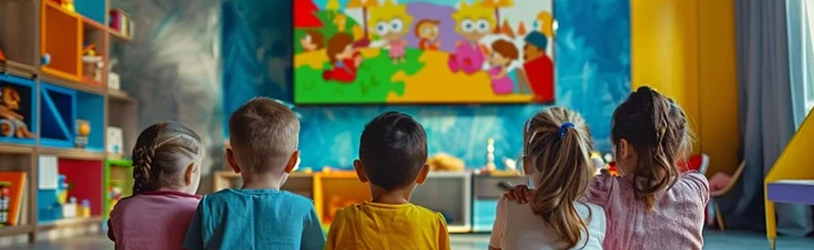
When we engage with animated content, several cognitive systems are active at once. We are picking up visual cues, following the motion, listening to the narration, and relating emotionally, all at once. Studies have shown that as a result, we achieve much higher levels of attention, comprehension, and retention than we would with static text or traditional lectures.
One of the great strengths of animation is that it can make the invisible visible. What is the process of cellular division like? What does a volcanic eruption look like from the inside of the earth? What was the actual sequence of events in the Battle of Waterloo like, in real time? These are things that simply cannot be depicted in any kind of photograph or diagram, but can be animated in great detail.
The role of animation in education is not limited to textbooks. Today, animation is being utilised in nearly every industry that requires complex information to be effectively communicated:
● K-12 Education – animations are being used to create interactive science, history, and mathematics content
● Higher Education – animations are being used by universities to teach complex topics such as molecular structures, architectural concepts, engineering, and anatomy
● Corporate Training – animations are being utilised by corporations to create e-learning content
● Healthcare – animations are being used by doctors to train, patients to understand complex diagnoses, and to simulate procedures that cannot be realistically recreated
● Public Education – animations are being used by various government and non-profit organisations to raise awareness on various health, safety, and social topics
The common thread in all these industries is that complex information is being presented in such a way that not only is it easily comprehensible but also entertaining. The power of edutainment lies in this ability.
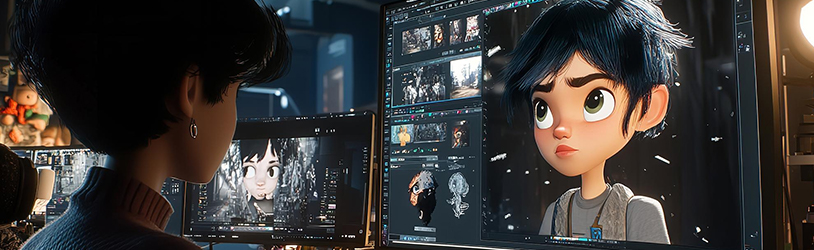
It is not difficult to see why animation as a learning aid is easily dismissed as not serious, especially when we think about the kinds of things we were exposed to as children, which were meant purely for entertainment. The reality is that educational animation is a highly skilled, serious business. The creation of a two-minute animated video that accurately represents a biological process, is engaging for the learner, and is interesting and attractive enough that the learner is likely to remember it, is not a trivial task.
To create effective educational animations, an individual needs to have knowledge of storyboarding, narrative, visual design, motion, character design, environment design, as well as the ability to communicate complex information in an easily understood visual form, which is at the heart of the field of animation, at the confluence of art, technology, and communication, and is absolutely learnable.

As edutainment grows, so does the demand for animators who can work in this space. E-learning is a multi-billion dollar global industry. Educational platforms, ed-tech startups, healthcare providers, and corporate training companies are all actively seeking skilled animators who understand how to design for learning outcomes, not just aesthetics.
For those looking to build this kind of career, choosing the best animation institute in Kolkata is a foundational decision. At Arena Animation, students are trained not just in the technical tools of animation, but in the creative and communicative thinking that makes animation genuinely effective. Whether you want to create educational content for classrooms, design training simulations for industries, or develop animated explainers for digital platforms, the right education is where it begins.

We are moving towards a future where personal, animated, interactive content is not just the norm but rather the standard in learning – not just the exception. As we advance with AI, VR, and live rendering, we will see more powerful tools available to the educational animator.
The question is not whether animation is going to play a significant part in determining the future of education. The question is whether you are going to be one of the people determining that future.


Leave a Reply