

Animation
08-09-2026
How Long Does It Take to Learn Animation in Blender? A Student’s Guide
Read More ...
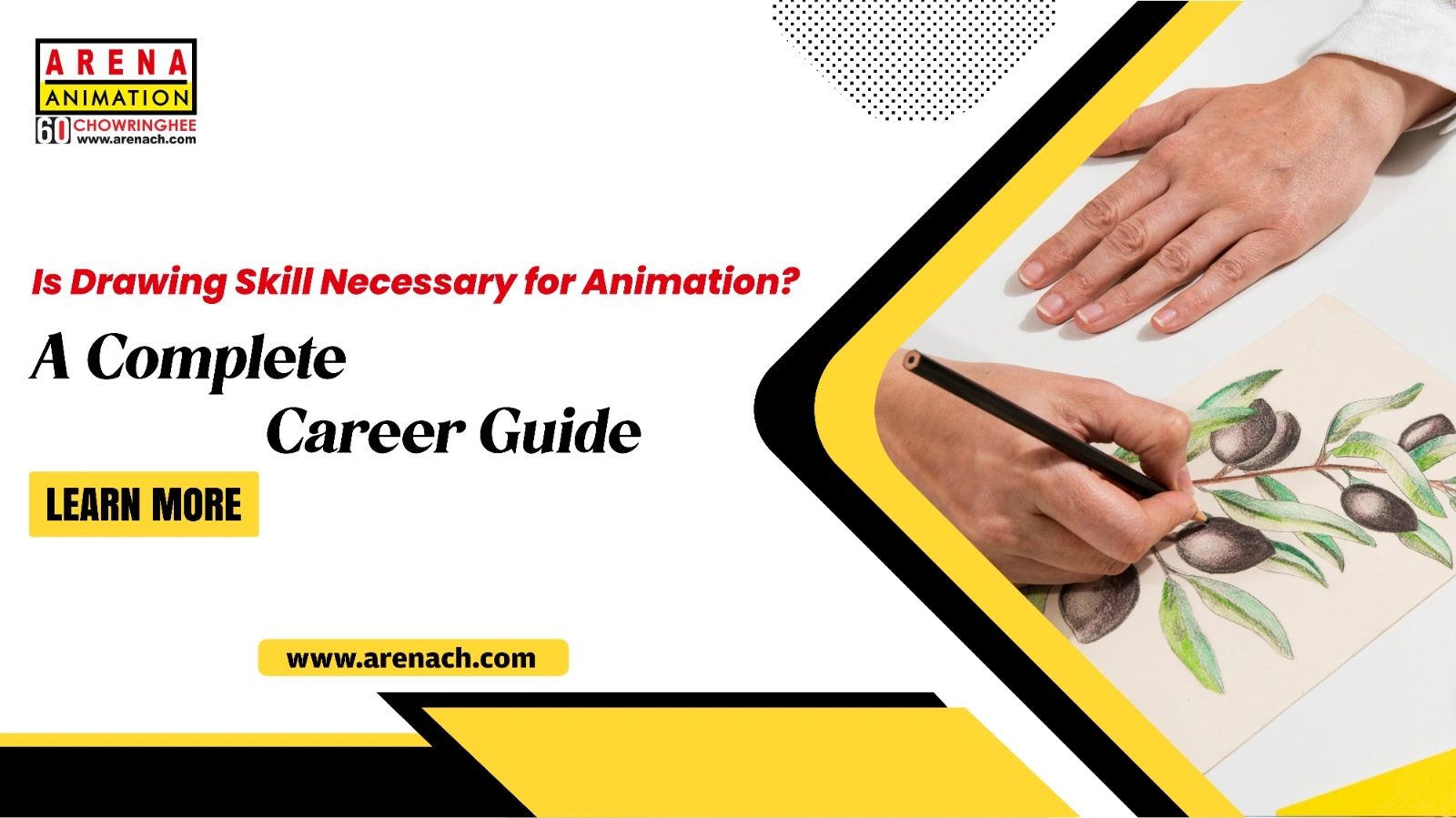
Is drawing skill necessary for animation? It’s one of the most common questions students ask before choosing this career, and honestly, it stops a lot of good candidates before they even start. Here’s the short answer — no, drawing is not compulsory for most animation jobs today. It helps in a few specific roles, but the industry has moved far beyond pencil and paper.
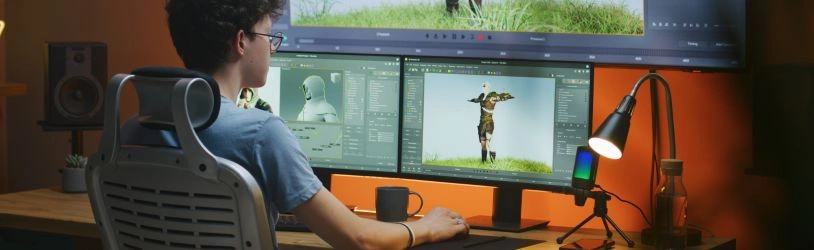
If you picture animation as someone hunched over a drawing table sketching frame after frame, that image is outdated. Most of today’s animation runs on software — 3D tools, rigging systems, simulation engines, compositing pipelines. A single film or game gets made by dozens of specialists, each handling a different piece of the puzzle. Drawing is just one of those pieces, not the whole thing.

To be fair, there are roles where knowing how to draw genuinely gives you an edge:
• 2D Animator
• Character Designer
• Concept Artist
• Storyboard Artist
• Illustrator
Even here though, most professionals aren’t using pencil and paper anymore — they’re sketching on tablets with a stylus, inside software like Photoshop or Procreate. And if you’re drawn to these roles but can’t sketch well yet, don’t worry too much. Basic drawing is usually taught right from the start in a proper animation course.

Now here’s the part that usually comes as a relief to a lot of students.

3D animators bring digital characters to life using tools like Maya or Blender. The job is about movement — how weight shifts, how a character reacts, how believable an action looks. You’re working with a model that’s already built. Drawing simply doesn’t come into it.

Compositors blend live footage with CGI, green screen shots, and layered effects. It’s technical work — lighting, colour matching, precision with software. There’s no sketching involved anywhere in this process.

This is one of the fastest-growing fields right now. Think reels, brand videos, explainer animations, news graphics — all built in After Effects. What matters here is a sense of timing and visual rhythm, not the ability to draw a face.
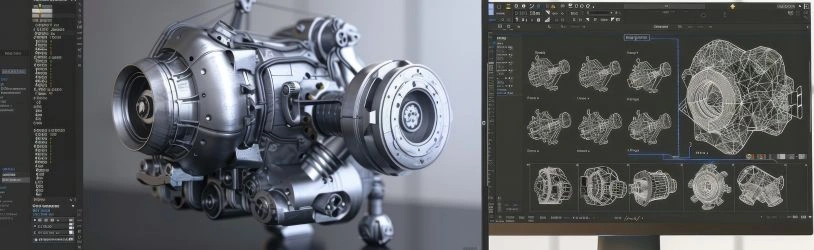
Modelers build digital objects, characters, and environments using software like Blender or ZBrush. It’s closer to sculpting with geometry than drawing on paper.

FX artists simulate fire, smoke, water, and explosions using physics-based tools. This role leans heavily on logic and technical understanding — drawing has nothing to do with it.
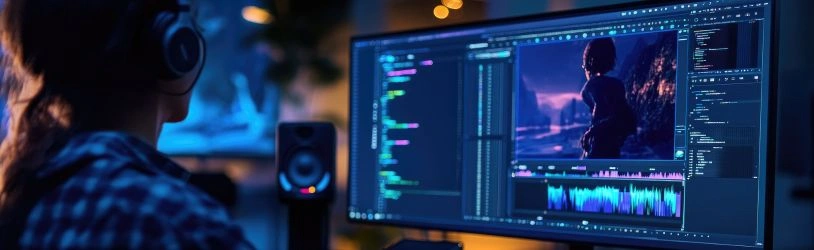
Editors shape footage into a final story using Premiere Pro or DaVinci Resolve. Pacing, sound, transitions, colour — that’s the job. Drawing skill won’t move the needle here one bit.

Studios and recruiters care about what you can do with software and how strong your portfolio is. That’s it. A few things that carry real weight:
• A solid grasp of movement, timing, and visual storytelling
• Hands-on skill in tools like Maya, Blender, After Effects, Nuke, or Premiere Pro
• An eye for detail and realism
• The ability to solve visual problems creatively
• Consistency — showing up and practising even when it’s not fun
Students from science backgrounds, commerce backgrounds, even students who’ve never picked up a pencil for art, build strong animation careers all the time. This industry rewards effort and skill, not a childhood spent doodling.

No. And this comes up constantly, so let’s settle it clearly. 3D animation is about understanding motion — weight, timing, emotion, momentum — and applying that understanding through a digital rig. You’re not sketching anything. Plenty of well-known 3D animators never learned to draw and built entire careers around software and movement principles.

Yes, most good animation programs do include basic drawing as part of the foundation. Not because you’ll need it every day at work, but because it sharpens how you see and understand visuals — proportion, gesture, composition. Students who’ve never drawn before are brought up to speed gradually. Nobody gets left behind for lacking a sketchbook.

Animation and VFX in India are growing fast, and there are real reasons behind it:
• OTT platforms like Netflix and Amazon Prime constantly need fresh animated and VFX-heavy content
• Gaming has turned into a massive, mainstream industry
• Every brand doing digital advertising needs animated creatives
• Social media content creation has become its own career path
• Virtual production is replacing a lot of traditional film sets
That growth translates into jobs — in studios, ad agencies, gaming companies, streaming platforms, and increasingly, freelance work too. Drawing is optional in most of these paths. A strong portfolio isn’t.

Not really, no. This is another assumption worth clearing up. VFX compositors, motion designers, and FX artists are often among the highest earners in the field, and none of that comes down to drawing. What decides your pay is how specialised you are, how well you know your tools, and how good your portfolio looks when a recruiter opens it.

Animation could be right for you if you:
• Genuinely enjoy movies, games, or visual storytelling
• Don’t mind spending hours learning new software
• Have creative ideas but never really learned to draw
• Want a career that’s technical, growing, and digital-first
• Are willing to put in consistent practice
Don’t let the drawing myth talk you out of something you might actually be great at.
Pick the area that genuinely excites you first — maybe it’s 3D animation, maybe VFX, maybe motion graphics. From there, look for a course that teaches real industry tools, gives you actual project work, and helps with placements once you’re done. Build your portfolio as you go. That portfolio ends up mattering far more than whether you can draw a portrait.
So, is drawing skill necessary for animation? For most careers in this industry, the honest answer is no. It helps in a handful of specific roles, but it was never the entry ticket people assume it is. What actually matters is your understanding of visual storytelling, your comfort with software, and your willingness to keep improving. Animation is built by teams of specialists — and there’s room on that team for people who’ve never drawn a single sketch.
Still hesitating because you think you can’t draw? Here’s a question worth sitting with — what if drawing was never really the requirement in the first place? At Arena Animation Chowringhee, we’ve helped many students who walked in with little or no drawing background and built successful careers in animation studios, VFX houses, gaming companies, and media agencies. They didn’t get there in spite of skipping drawing — they got there because they focused on what actually gets you hired.
Our animation course covers everything from 3D animation in Maya and Blender to VFX compositing, motion graphics, and gaming, all built around hands-on project work rather than just theory. We do teach basic drawing fundamentals too, not as a hurdle, but as a way to build stronger visual instincts. Every student gets individual attention, regardless of where they’re starting from. Our placement team works closely with students from day one, helping shape portfolios, prepping for interviews, and connecting them with studios across India. Whether you’re looking for a short-term course or a full career program, we’ve got a path that fits. Based right in the heart of Kolkata, Arena Animation Chowringhee has the experience and the track record to back this up. Your drawing skills were never the real barrier here — starting is.
Que. Can I get into animation without knowing how to draw?
Ans: Yes. Most courses are built to welcome students from every kind of background, drawing experience or not.
Que. Which animation roles skip drawing entirely?
Ans: 3D animation, VFX compositing, motion graphics, video editing, FX simulation, and 3D modeling don’t require drawing skills.
Que. Will I still be taught drawing in the course?
Ans: Usually, yes. Basic drawing fundamentals are part of most programs so students build a working visual sense.
Que. Can non-drawing students earn well in this field?
Ans: Definitely. Pay depends on software skill, specialisation, and portfolio quality — not drawing ability.
Que. Is 3D animation tougher without a drawing background?
Ans: Not particularly. It’s software and principle-driven, so a drawing background doesn’t really change the difficulty.
Que. How long does it usually take to build a career in this field?
Ans: Somewhere between 9 months and 2 years, depending on which specialisation you pick.