

VFX
24-10-2026
VFX vs Motion Graphics: Which Career Should You Choose?
Read More ...
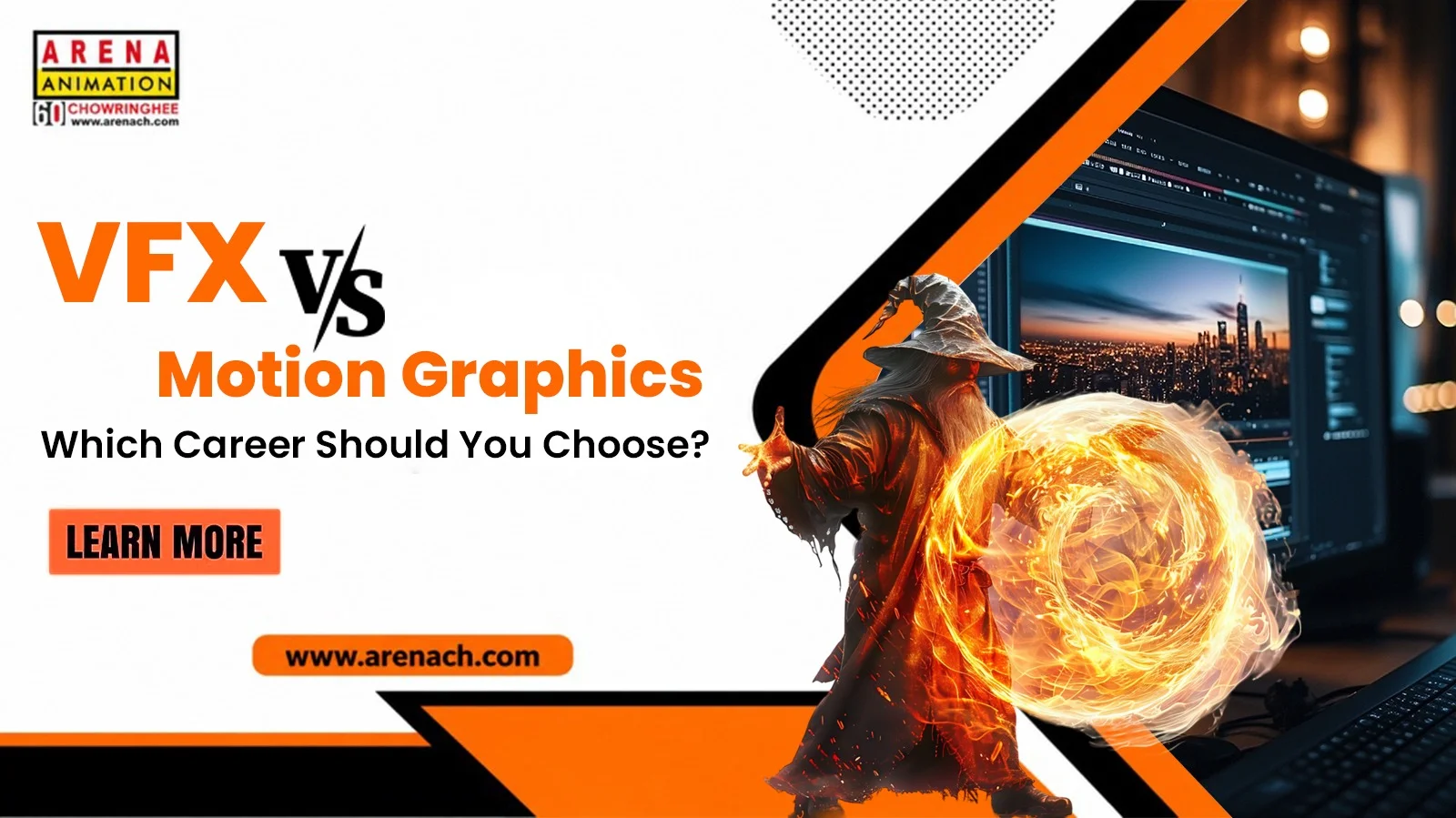
VFX is short for visual effects. A camera can’t always get the shot you need. It might cost too much, or it might be too dangerous. Sometimes it’s just impossible. This is where VFX artists step in. They take the actual footage and add computer-made elements until it all looks like one scene. Think of a fantasy creature in a film, a digital background or an explosion. Even removing an unwanted object from a shot is VFX work.
Here, the job is to make graphics move. The graphics can be text, shapes, icons, illustrations or logos. This type of work is common in ads, animated titles, explainer videos, presentations and social media posts. You’ve probably seen a logo animate at the start of a video. Or an infographic where the numbers move on screen. Or a video that explains a product using text and graphics. All of that is motion graphics.
The reason behind the work is different. A VFX artist wants the added elements to fit the scene so well that nobody spots them. A motion graphics designer wants to get a message across with moving design. That’s why VFX artists deal with footage, lighting, 3D objects and compositing. Motion graphics designers, on the other hand, spend most of their time on typography, layout, timing, colour and animation.
| Comparison | VFX | Motion Graphics |
|---|---|---|
| Main focus | Creating or editing visual scenes | Animating graphic elements |
| Common projects | Films, series, games and advertisements | Explainer videos, ads, titles and social media |
| Key skills | Compositing, tracking, lighting and effects | Graphic design, typography and animation |
| Common software | Nuke, After Effects, Maya and Blender | After Effects, Illustrator and Cinema 4D |
| Typical output | Visual effects and digital scenes | Animated text, graphics and visual messages |
This is a general picture. Real projects can use both fields, and some software is shared.
You need creativity, and you need technical know-how too. Making a digital addition look real means understanding how a scene works from start to finish. Viewers catch small mistakes easily. A shadow that falls the wrong way, a colour that doesn’t match, lighting that feels odd or a camera move that doesn’t line up can make an effect look less realistic. It’s worth learning compositing, rotoscoping, camera tracking, 3D modelling and rendering.
Here you need a feel for design and for movement. You’ll place text and images, pick colours that sit well together, keep layouts tidy and get the timing of each animation right. When you understand typography, composition and visual storytelling, viewers follow your work more easily. Patience is a big part of this job. Changes can come in again and again, even on a ten-second animation.
Each field uses its own software, and your role decides which ones you learn. VFX artists may use Nuke for compositing, Maya or Blender for 3D work, and After Effects for some effects. Motion graphics designers mostly work in After Effects, together with Illustrator and other design or 3D tools. But don’t treat software as the whole thing. The basic ideas behind the work are just as important.
Small projects are the quickest way to see how these fields work. They let you use the software, try your ideas and notice which kind of work you enjoy. Start with easy ones. After you feel more sure of yourself, go on to bigger projects.
• Shoot a green-screen scene and add a suitable background.
• Try removing unwanted objects from a video clip.
• Mix live-action footage with digital elements.
• Make a short scene with camera tracking and compositing.
• Design an animated logo or a title sequence.
• Make a short explainer video using text and graphics.
• Animate icons, shapes and illustrations for an advertisement.
• Create a short promo video for a product or service.
You can find VFX work in film, television, advertising, gaming and digital media. Your training and portfolio will decide which role you can apply for. Some examples are VFX artist, compositor, rotoscope artist, matchmove artist, lighting artist and 3D artist. Each of these has its own duties. So before you choose a specialisation, read a few real job descriptions. Employers usually want to see that you know the software, that you can solve problems and that you have finished work to show.
Advertising agencies, production houses, digital marketing teams and media companies hire motion graphics designers. A few designers work with independent clients too. You may see job titles like motion graphics designer, animated video designer, title designer or multimedia artist. The work could be promotional videos, animated logos, product explainers or content for online platforms. Knowledge of graphic design is a plus. So is the ability to explain your ideas clearly.
There’s no answer that suits every person. Scope depends on your skills, location, portfolio and experience, along with what employers are looking for. VFX can work well for you if cinematic scenes, realistic digital environments and detailed effects excite you. Motion graphics may fit better if you enjoy graphic design, short videos and visual communication. Both fields offer opportunities in the media and entertainment industry, depending on your skills and experience.
Think about what you enjoy. Do graphic design, typography and animated content appeal to you? Motion graphics may suit you well. Do visual effects, digital environments and cinematic scenes interest you more? Then VFX could be a better place to start. In both cases, try a small project in each field before you decide. You’ll find out what the work is really like. That’s more useful than judging by how good the finished results look.
Don’t rush into a course. Take time to compare the syllabus, duration, practical assignments, software covered and portfolio support. Check if it covers what you need for the kind of work you want to do. Ask the centre to show you projects made by students, and ask how your progress will be assessed. It also pays to look at the eligibility rules, total fees and learning facilities. A good course gives you enough time to practise and build work that shows your skills.
Employers and clients look at your portfolio to see what you can do and how you work. You don’t need every project you’ve made in there. Choose the ones that show your skills best, keep the layout simple and say what your part was in each project.
• Choose your best work: Add projects that show your understanding of design, animation or visual effects.
• Show different skills: Include a few different examples, but don’t let the portfolio get too long.
• Explain your contribution: Mention the tools you used and the parts you did yourself.
• Include project breakdowns: Where it makes sense, show how you reached the final result, such as compositing steps or animation stages.
• Keep it updated: Add new projects as your skills grow, and take out older work that no longer matches your current level.
• Prepare a showreel: If it suits your chosen role, put together a short video of selected work and start with your strongest projects.
When you compare VFX vs Motion Graphics, think about the work you’d like to do each day. Don’t pick one just because it’s popular. VFX has to do with visual effects and building digital scenes. Motion graphics combines design and movement to share an idea. In both, you’ll need regular practice, software knowledge and a strong portfolio. Look into what each field involves, try a few beginner projects and follow the path that matches your interests and long-term goals.
Do you want to build your skills in VFX or motion graphics and begin a career in digital media? At Arena Animation Chowringhee, we have courses for students who are interested in visual effects, animation, graphic design and motion graphics. Our options include the Advanced Programme in Visual Effects, Advanced Programme in VFX Compositing and Editing, Advanced Programme in VFX Film Making, and Next-Gen Visual Design & Motion Graphics. If you like related fields, you can also look at animation, Unreal Engine, digital content creation, graphic design, game art and development, and UI/UX design. Our programmes cover different areas of creative production, so you can compare the content and pick what suits you. If you’re looking for the best vfx institute in Kolkata, read through the course details, eligibility criteria and duration before you decide. Practical assignments and portfolio building also deserve plenty of attention when you prepare for creative roles. Contact our team to talk about your learning goals and find the right course. You can call 8981005544 or visit us at 60, Chowringhee Road, 3rd Floor, near Rabindra Sadan Metro Station, Kolkata – 700020 to know more about the available programmes.
Que: Can I learn VFX and motion graphics together?
Ans: Yes. A few programmes cover parts of both, since the tools and workflows are often alike. This can show you more types of creative projects. Still, build a strong base first, and keep practising the skills your preferred role needs.
Que: Do I need drawing skills to learn VFX or motion graphics?
Ans: Not always. Plenty of roles don’t ask for advanced drawing skills. Even so, basic drawing and a good eye for detail help, especially when you plan scenes or design graphics. In both fields, it’s also handy to know about colour, composition, movement and balance.
Que: Can students from any stream learn these skills?
Ans: In many cases, yes. Creative courses often take students from different educational backgrounds. Each programme sets its own eligibility, though. Check the requirements before you apply, especially for an advanced or specialised course.
Que: How long does it take to learn VFX or motion graphics?
Ans: That depends on the course, how deep it goes and the skills you want to gain. Short courses may focus on a few tools. Advanced programmes cover the full workflow. In either case, regular practice is what makes the difference.
Que: Is a portfolio important for creative jobs?
Ans: Yes. A portfolio is how employers and clients see your work and judge your skills. Add your strongest projects, explain what you did in each and keep the work relevant to the role you want.
Que: Can I work as a freelancer in either field?
Ans: Yes. VFX artists and motion graphics designers can both take on freelance projects, depending on their skills and experience. If you plan to work on your own, a good portfolio, clear talks with clients and on-time delivery matter a lot.
Que: Are VFX and motion graphics used in advertising?
Ans: Yes. VFX can add or change visual elements in an ad, and motion graphics can animate text, logos, product details and infographics. Some ad projects use both to complete the final video.
Que: Which courses can I explore at Arena Animation Chowringhee?
Ans: Arena Animation Chowringhee offers programmes in visual effects, VFX compositing and editing, VFX film making, visual design and motion graphics, animation, digital content creation and other creative fields. Please contact the centre to confirm current course details and eligibility.